

Step inside a subterranean sub-basement, navigate the concrete and steel corridors of a massive corporate campus, or walk into a metal-clad remote distribution center, and your smartphone will tell you what commercial drone platforms fear most: No GPS signal.
For conventional commercial drones, losing satellite lock triggers emergency land modes, disorienting drift, or catastrophic flyaways. Commercial off-the-shelf UAS were architected for open skies and clear constellation views. But critical security events, industrial accidents, and infrastructure failures do not wait for clear line-of-sight to satellites. They occur indoors, in enclosed, reinforced, and subterranean structures.
Brecourt Solutions’ Indoor Drone as First Responder (iDFR™) platform was engineered from day one to operate in GPS-denied spaces because our leadership team learned the reality of unmanned systems in the harshest proving grounds on earth: combat operations where GPS is unreliable, jammed, or non-existent.
Born from Tactical Reality: The Combat Veteran Advantage
In military theater, relying on uncompromised GPS is an operational liability. Electronic warfare, physical terrain masking, urban canyons, and subterranean tunnels routinely strip operators of satellite-guided position hold. Tactical survival requires systems that maintain spatial awareness and mission execution strictly through onboard computing, optical guidance, and internal sensors.
Our team, comprised of combat veterans with deep operational backgrounds, including Navy SEAL and special operations warfare, bring hard-earned principles to corporate and industrial physical security.
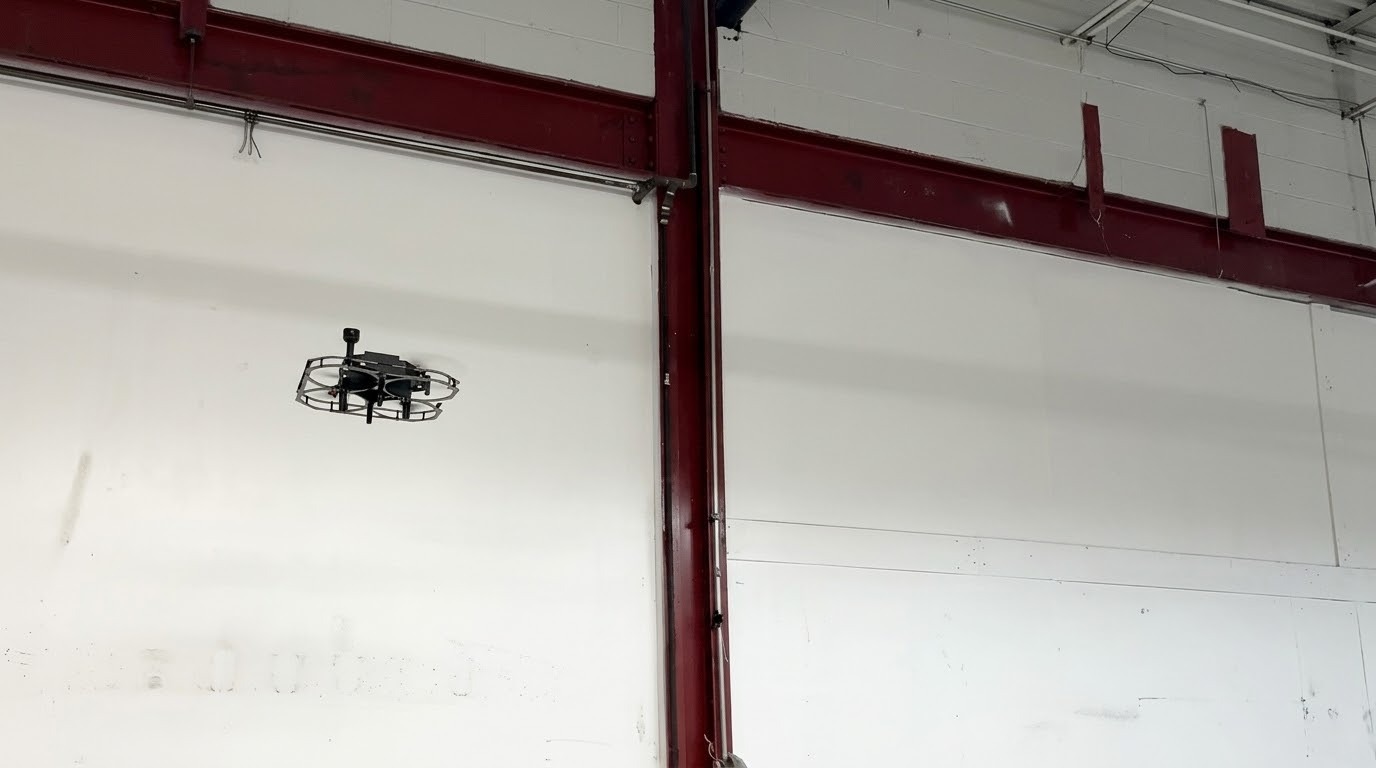
When designing iDFR™, we eliminated satellite dependence altogether. Rather than relying on cloud handshakes or external positioning satellites, Brecourt drones utilize on-board edge processing, advanced computer vision, and real-time spatial odometry. The drone knows where it is relative to walls, racks, columns, and corridors—allowing precise, stable flight inside fully enclosed structures without ever pinging a satellite.
The Innovation of True GPS-Denied Autonomy Indoors
Navigating a GPS-denied indoor environment requires far more than hovering in place; it demands real-time obstacle avoidance, path recalculation, and instantaneous command response.
1. Zero Satellite Latency via Edge Computing
Traditional cloud-tethered platforms introduce communication lag that makes high-speed indoor piloting hazardous. Brecourt’s iDFR™ runs local edge computing directly on the airframe. By processing visual and inertial data on the craft, flight stabilization and obstacle negotiation happen in milliseconds, providing a sub-second pilot latency whether your Security Operations Center (SOC) is down the hall or across the country.
2. Autonomous Resiliency
What happens if structural shielding or thick reinforced concrete interrupts radio-frequency control links? In commercial drones, signal loss indoors often causes crashes or uncontrolled landings. With Brecourt’s Indoor Drone as First Responder (iDFR™), if operational communications are disrupted, the drone automatically transitions into local autonomous tracking. It holds station, tracks the event, and ensures your eyes on the scene stay active without drifting into structure walls or racking.
3. Regulatory Freedom: No FAA Waivers Required
Because iDFR™ operates entirely within indoor, private, and enclosed facilities, it operates completely outside FAA Part 107 airspace restrictions. There are no flight authorization delays (LAANC), no pilot certification bottlenecks, and no regulatory red tape preventing immediate launch.
Built for the Hardest Indoor Environments
Commercial real estate, critical infrastructure, and supply chains present diverse structural challenges. Here’s how iDFR™ delivers situational awareness across mission-critical indoor footprints:
Subterranean Basements, Parking Garages & Tunnels
Sub-level parking structures, mechanical tunnels, and foundational basements feature dense rebar, post-tensioned concrete, and thick foundation walls that form an impenetrable barrier to GPS and standard cellular data.
- The Challenge: High security risks, poor lighting, and blind spots with zero overhead signal.
- The iDFR™ Solution: Using computer vision and build-in AI, iDFR™ deploys around facilities to investigate alarms, verify water leaks, or clear security perimeters without placing security guards into dark, confined spaces.
Large Corporate Campuses & High-Rise Atriums
Sprawling enterprise campuses feature cavernous multi-story atriums, long glass-curtain corridors, and heavy multi-floor footprints where security patrols take minutes to arrive on scene.
- The Challenge: Escalating physical incidents require immediate visual verification before guards can physically traverse campus wings.
- The iDFR™ Solution: In an ideal setting, pre-positioned iDFR™ docks deploy in seconds, soaring over open atrium floors and navigating corporate sky bridges. The drone reaches the exact alarm zone quickly, feeding high definition live video directly into the SOC video management system (VMS).
Remote, Metal-Clad Logistics Warehouses
Millions of square feet of corrugated steel siding, 40-foot racking tiers, and dense metal inventory racks create severe Faraday-cage effects that degrade both GPS and wireless signals.
- The Challenge: Traditional drones cannot maneuver in 10-foot-wide rack aisles without GPS lock, and manual inspections require scissor lifts or rolling ladders.
- The iDFR™ Solution: Non-ducted, collision-resistant rotor guards allow iDFR™ to glide through narrow high-bay aisles, auditing inventory labels, checking elevated HVAC systems, or verifying perimeter door breaches without ground disruptions or signal degradation.
When Seconds Count, Don’t Rely on Satellites
In high-stakes security and industrial operations, the gap between an alarm triggering and a human arriving on scene is where property loss, downtime, and physical harm happen.
No GPS. No blind spots. Immediate situational control.